

Omaha native Todd Fink was on his way to becoming a professional skateboarder. Much like other teenaged boys who grew up in the 1990s, skating had become a way of life, an obsession, and Fink kept excelling at it—much to his high school guidance counselor’s chagrin.
“That’s not a plan,” he remembers hearing. But skaters don’t typically follow rules—rebellion comes with the territory–and Fink set out to prove everyone wrong.
There was one problem. Diagnosed with rheumatoid arthritis at a young age, Fink had opted for a knee surgery right before signing with a pro team, but his knee got stuck at a 45-degree angle for months. Another surgery followed, and that effectively ended his skateboarding career. He mulled over becoming a professional pool player before landing on music. The Omaha indie music scene was bubbling, and he ultimately formed what would become The Faint in 1995 with Fink on vocals, his brother Clark Baechle on drums, and Joel Petersen juggling bass and keyboards. Six years later, “Agenda Suicide,” taken from the group’s third album and first with guitarist Dapose, 2001’s Danse Macabre (Saddle Creek Records), blew up and was in heavy rotation on local radio.
The song stemmed from Fink’s refusal to conform to a 9-5 and fall in line like so many people are forced to do to make a living. He decided he’d rather “live on saltines and ketchup” than play it safe. The ethos he’d adopted as a skateboarder was paying off. And though his guidance counselor may have jinxed his skating ambitions, Fink did ultimately prove the counselor wrong.
Shortly after Danse Macabre was released, The Faint set out on a 35-date run with No Doubt as part of the Rock Steady Tour, and Fink has carried that momentum into a successful music career for decades. As “Agenda Suicide” approaches its 25th anniversary, Fink dives into how his decision not to play it safe paid off and “Agenda Suicide” became a definitive statement for the band.
Pass the Ketchup
I had made a decision at a certain point, one album before that song [1999’s Blank-Wave Arcade], to just go after what I wanted to be doing with my life instead of spending time working on other people’s projects. And I think it was still pretty fresh in my mind. I guess I felt like I was rewarded for making that decision. I mean, it wasn’t like grueling work for me. I was working at a record store at the time [Homer’s Records in downtown Omaha]. And I love working at record stores, but it was taking up all my time and I wasn’t doing other things with my life. I wasn’t pursuing my own music. I was learning everyone else’s. I decided that I’d rather just eat saltine crackers and ketchup and drink water than not be doing what I want to be doing. That’s really when the music changed.
I felt like the universe rewarded me for doing that.
The Road Less Traveled
When I wrote the lyrics to “Agenda Suicide,” I was noticing how that worked out, trying to offer that path and giving that to whoever would listen. I did feel like it was a courageous act, to be honest. But I had sort of built up to it in a way, because I had already chosen to be a professional skateboarder as my career, which is not what anyone would recommend. I even went to a high school guidance counselor and you had to tell them what your plan is for the future. They were like, “That’s not a plan. That doesn’t work.” I was like, “Well, you’re a guidance counselor. Was this your plan?” Yeah. No offense to guidance counselors, but I think playing it safe can be a huge waste of life.
Second Thoughts
I felt really fortunate to have thought of a couple of the songs on Blank-Wave Arcade and felt like I’d really stumbled across something, especially this song “Worked Up So Sexual.” I felt really lucky to have had that come to me, so when Danse Macabre came around, I wasn’t so sure that this was as good. I felt like “Worked Up” was more of a hit. We had gotten the response that I expected from that song. I wasn’t really coming into Danse Macabre as confidently.
Surprise…It’s a Radio Hit
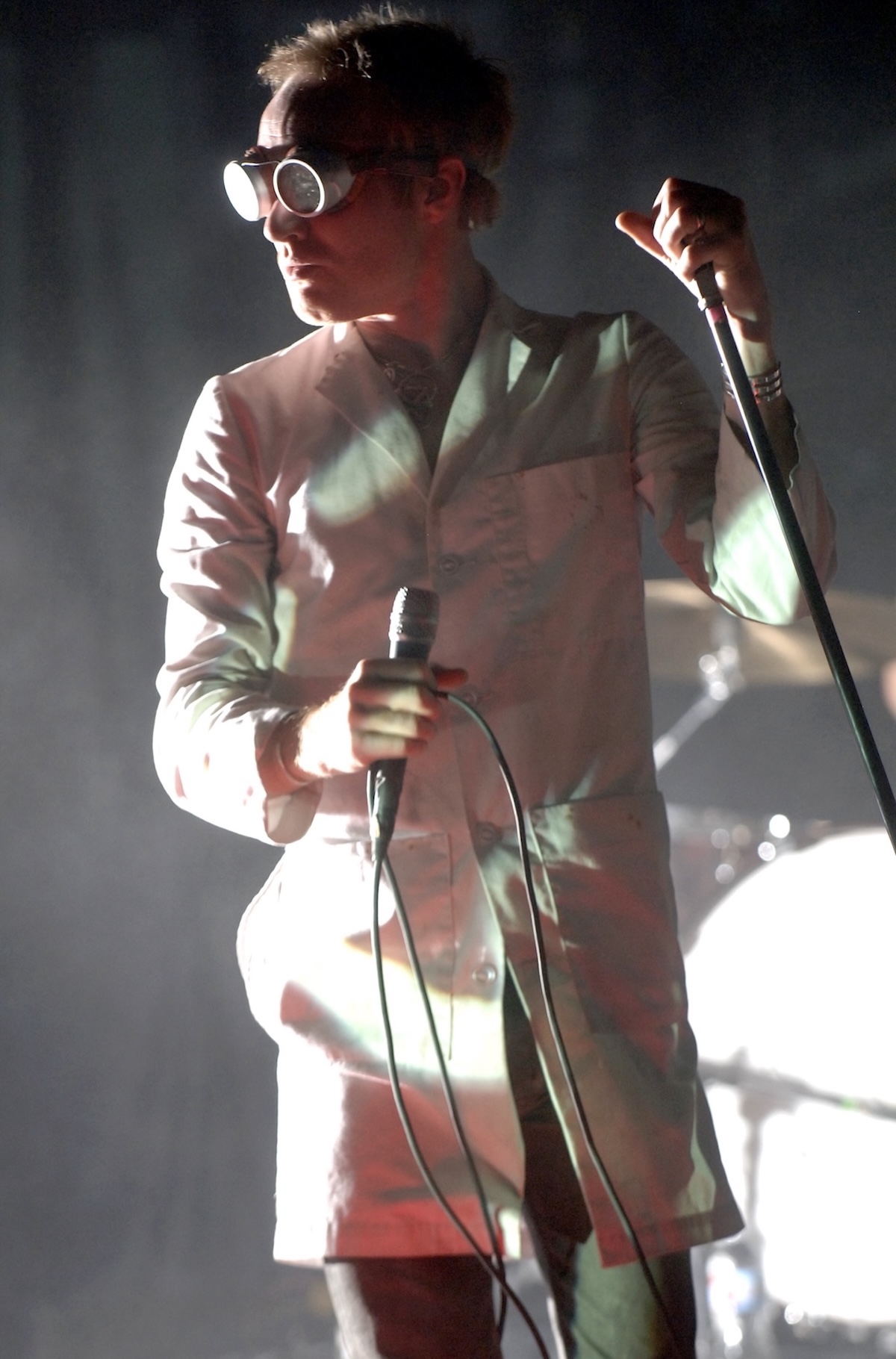
I was maybe relieved. Maybe surprised. Maybe both. But I didn’t really like the radio. I remember hearing that the radio station was playing it. I did care. It didn’t mean a lot to me, but I did care.
Breaking Rules
I don’t remember a lot about how it came about. I remember trying to break some rules. It was very spooky and kind of, I don’t know, like churchy or something. We’d go halftime and we’d also change the tempo, which is another no-no. There was just a mix of things that shouldn’t go together. Since we liked it, we thought, “Well, if we can make it, I want to make something that we really like and that will be polarizing to other people.”
Detour
I was sponsored by a number of different skateboard companies. They didn’t pay, but they would give me gear to sell, so that was kind of like a job. I would just sell it to my friends and people that I knew. I was in the position to consider turning pro, but I wanted to wait. Then I switched from Z to H-Street and, at that point, I was kind of dragging my feet. I thought, “I’ll just get really good before going pro.” Then I thought I’d have a surgery. I had done my whole skateboard career with rheumatoid arthritis, but I thought I’d get a surgery. I was led to believe that it could stop my knee from clicking and get it warmed up faster and it wouldn’t swell. I had a lot of times where I’d have to have it drained every couple weeks and get steroids put in it.
I was just trying to put that behind me and have a surgery. But my knee got stuck at about a 45 degree angle after the surgery, so I couldn’t really walk anymore. My leg would be too short to walk. I also couldn’t skate, obviously, so I ended up having another surgery like six months later that straightened out my leg. Then they put me on a 24-hour sled. For days, I would lay down 24 hours a day and my leg would straighten out and bend all the way. Then I could walk again after I recovered from that, but during that recovery is when I was trying to figure out what I was going to do with myself, because I couldn’t really pursue skating anymore.
Pool Shark, Perhaps?
I liked pool, so I thought I’d try to be a pro. My knee got the best of me and I had to figure something else out. I wasn’t great at pool or anything, but what I had learned was that whatever I enjoyed doing, if I really love doing it, I’m the type of person who’s going to get better and better at it until I’m just as good as I can be—always improving—but as good as I can be. I was pretty sure I could do that, even though I didn’t shoot pool any better than anybody else that had a pool table.
Music.
But I just kind of got pulled into the whole music world in Omaha by a guy named Chris Hughes. He was friends with Tim [Kasher of Cursive], Conor [Oberst] and that whole scene. Everyone in that scene was really excited about Slowdown Virginia. Their CD hadn’t come out yet and I got turned on to that, Simon Joyner, and a few other people and just like really liked it. That was my new scene. I switched from skateboarding to the music scene. We ended up pooling money together to get the Slowdown Virginia record made and released. That was kind of the start of Saddle Creek Records. It was called Lumberjack Records at that time, but then we found out there was a distribution center that was already called that, so it got renamed.
Here Come the Majors … All of Them
We talked to some more than others and we were pretty close to signing with American Records, which was Rick Rubin’s thing. He was gonna produce us and stuff. That’s kind of the one thing I think that could have been a mistake. I’ve learned to respect him and his input more over the years. I already did at that time and I liked him, but yeah, I do wonder sometimes what that would have done to our career. But we just decided it wasn’t a good idea. Those were the days of VH1 Behind the Music and part of what we knew about the major label music business. We were like, “Yeah, the bands get a terrible deal here.” Then they break up and hate each other and their lives are destroyed.
DIY
We liked Fugazi’s model better of just do it your way, do everything your way. Nobody can tell you anything. You’re not going to put yourself in a position where you have to change your album cover or your band name or your song lyric or leave these songs off your album, or you have to perform at something that you would just never do. We didn’t really have our own scene. We had the scene of Saddle Creek and everybody sounded a little different than each other on that label anyway. We were quite a bit different, but everyone was supporting each other and that was cool.
For Life
I wanted to be a lifer. I saw myself as just doing this and this is what I want and like to do. I never want to stop doing it. I don’t want to blow this up by making the wrong mistake with a record label. We did pass up way too much money and great opportunities probably, but we’re still a band, so I’m happy.
Creative Control
We didn’t have that much to do with the video, honestly. It happened through maybe [former keyboardist] Jacob [Thiele]. They somehow knew a video team at this company in Kansas City called MK12. They were doing cool stuff, so we went and met with them and schemed on what it would be like. What they were doing looked cool, and we were just like, “Well, we’ll just trust you on this.” They seemed to have a vision, understand what the song is and are ready to make it special. That’s what we wanted. We just wanted something that’ll break some rules somewhere, create something new and get a good look, something that makes sense with the song itself and type of band this is. I thought they did a great job with it. Maybe this is a dream, but I think they put Insane Clown Posse in the elevator. Maybe I just dreamed that. The video quality somehow got degraded over time. It’s hard to see what’s actually happening anymore. It’s kind of sad, but it’s still great.
In Summary
The meaning of the song sums up the band better than most of our other songs. I’m glad that that’s the song that a lot of people know of us. Each album we have a new tour, and it seems like the first couple records get a little further from the crowd’s mind, like not everybody knows them anymore. Everyone wants to hear stuff from Fasciination right now, and Doom Abuse is starting to pick up sales. It’s interesting how this works and with the younger crowd. But in general, “Agenda Suicide” is probably the song that people know most from us.
I’m proud of that song. We had felt like we had already broken out, but when Danse Macabre came out, it was more like the world was sort of ready for something like that, whereas with Blank-Wave Arcade, we were just kind of a little early.
Some Wise Words for That Guidance Counselor
It’s about finding your passion, living life authentically and filling your schedule with what you like and protecting your time from nonsense. Just do something you care about and that’s kind of what the song is about. Have the courage to go for it and make sure you’re doing something that you love doing.

