

No one enjoys Crispian Mills’ sense of humor more than the Kula Shaker frontman himself. His conversation is punctuated by chuckles and laced with a sly wit that I don’t recall from our previous interviews for Kula Shaker’s first two albums, K (1996) and Peasants, Pigs & Astronauts (1999).
At the time, the group was a Britpop outlier, their heavily Indian-influenced sound recalling the Beatles’ excursions into similar territory. Mills’ lineage as the son of “original Disney kid” and acclaimed actress Hayley Mills (The Parent Trap) and grandson of Academy Award-winning actor John Mills (Ryan’s Daughter), was often held against him by the British media. This positioned Kula Shaker as the whipping boys of the era, yet their fanbase was strong and remains steadfast some three decades later.
There is no sign of lingering resentment from Mills. Speaking from his home in Cornwall, he sounds like a classic novelist and looks like a literary cowboy with a well-textured haircut and wearing a kerchief and a button-down with decorative snaps. His eyes look smudged, as though he’d slept in eyeliner. His screen name reads “Kula Shaker,” with which he is synonymous.
Across the English Channel from his home in Belgium, Kula Shaker’s bass player Alonza Bevan joins the conversation, every bit the English country gentleman abroad. “I put it down to pressure,” he says of the group’s implosion after their strong start. “We’d lived together for years, then we’d been on the road together for years. We were demonized in the British press who were nasty. We weren’t particularly having fun. We were young and we never had time to digest what had happened quite fast for us. ”
They reformed five years later without keyboardist Jay Darlington, who was then performing with Oasis. Darlington found his way back to Kula Shaker by 2022 and rejoined them officially for 2024’s Natural Magick. “Having Jay back has been really good,” Bevan says. “It feels like a missing piece has come back in. Even on a personality level, on a character, on a talisman level, he brings a lot to the band.”
Darlington’s manic performance drives the group’s eighth album, the self-referential yet fresh Wormslayer, through its psychedelic rock ‘n roll paces. The album is equal parts energetic and spiritual, featuring the infectious Eastern-tinged melodies that are Kula Shaker trademarks. It also captures the irrepressibility of the group’s live shows—a quality Mills admits has always been “strangely elusive,” as he and Bevan share the making of Wormslayer through a series of amusing analogies.
You completed a North American tour a few months ago. How did that go?
Crispian Mills: It was a legendary tour. It felt like we were a punk rock band in the late ’70s driving vast distances in a van. We got to connect with the country in a way that we hadn’t for a long time. You’re a little bit isolated on a tour bus, and certainly on a plane. The crazy budget crunches put us in a van, but it was fantastic. It was wonderful to see so much of America and being able to stop whenever we wanted. When you’re 30 years into a career, you want to be making new anecdotes.
Any you can share?
CM: The Regent in San Francisco was great because we got our light show [Lance Gordon’s Mad Alchemy]. It’s a strange alliance, because we’re very vintage, very retro in our tastes and we love an approach to playing music that is classic, but we like to do our own spin on it that brings it into the 21st century. He’s the same. He does the classic oil light show, but he does it with these powerful lenses and computer projections. He can literally fill a room. It’s so bright with immersive colors. It’s a really good partnership
We brought him over to England to do some dates. He blew people’s minds. The Limeys had never seen anything like that. We did some dates with Ocean Colour Scene, and the audience were staring, open-mouthed, with their brains melting. It’s some crazy abstract shapes. “Am I seeing an upside-down elephant? Am I seeing a lady’s genitals here? Are we seeing the same thing?” It’s amazing. He’s a proper artist.
KEXP in Seattle was the last gig of the tour. That was kind of strange to do a studio session with no one there. Having just played to audiences, it was kind of like swimming with your clothes on, but it turned out great.
Wormslayer and Natural Magick came in quick succession. Is there a connection between the two?
CM: It’s a sequel. It’s very much the inevitable next part of the story. We were coming out of a bit of a prog period for the band, so when Jay came back, we said, “Let’s write a bunch of three-minute songs.” Wham bam, like the good old days where you’ve got to win over an audience with short songs. We did that and I think it was successful. It captured how we were when we first got together with Jay, right at the beginning. All of the playing we’ve done with Jay back in the band, all the things that have been happening live, the improvs and the jams, that’s been more integrated, so now you’ve got tracks like “Wormslayer,” which are seven minutes with intros and outros, but you’ve still got a lot of quite focused, muscular songwriting. Songwriting is a discipline in terms of how you tell your story and how effective you are.
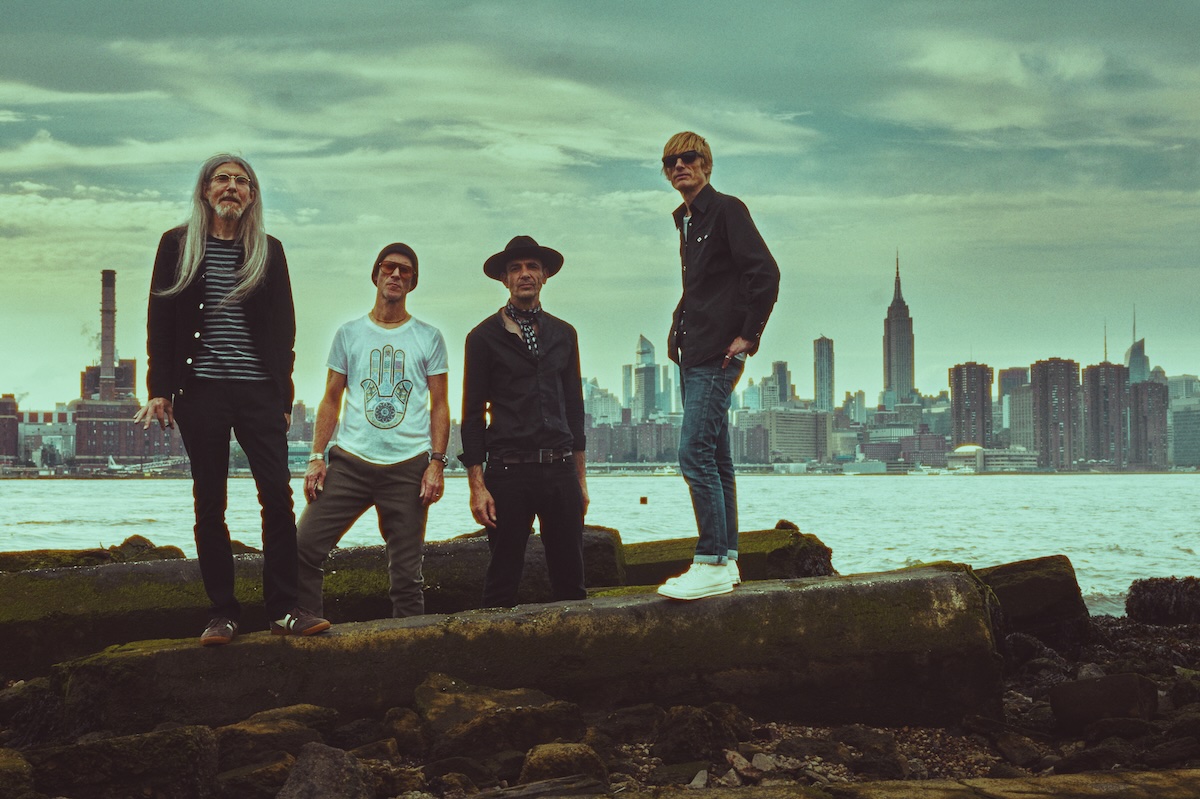
Were Wormslayer’s songs written before you went to the studio?
CM: Yeah, it was all written. 80% of it was written while we were touring. Even “The Winged Boy” and “Good Money” were worked on as we were touring. We toured pretty solidly, and then right at the very end, we went back in to try and beat what we had and came up with “Lucky Number.” That was the last track we recorded, and it ended up being the first song on the album.
It’s like the good old days at the birth of this industry, where you had to be prolific and you had to tour your asses off. It’s just a very unexpected turn of events for us for the band to be in its prime and to be so prolific when we are all 50. We were not expecting this. We were supposed to be resting on our laurels in the Caribbean or in the Himalayas. I don’t know what happened, but here we are in the trenches. The gigs have been fantastic. It’s very surreal to be relaunching the band after all this time.
It seems many bands that got their start in the ’90s are having similar experiences.
CM: It’s a strange turn of events. But you know, there’s a lot to sing about now. It’s not like there’s no stimulation. The world is broken. That’s a source of inspiration because it’s bringing out the best and the worst in people. That feeds self-expression. The reason people stop being creative is that they’re not being inspired by the world anymore. There’s a lot going on, and a lot of it is really inspiring. Even though there’s a lot of tragedy and madness, that’s always been there. Everything’s just amplified. The way the internet has sped everything up, all the madness and the bullshit is amplified. But also, the angelic counterattack has also been amplified. Some big, amazing people out there are coming together to heal each other and the world. You’ve got to make sure that you’re focused and you’re not being absorbed in all the negative stuff. Music has always fed off the negative stuff as stimulation to express yourself. It’s an impetus to bring people together. So I think it’s a very healing time. As anybody who’s taken ayahuasca knows, sometimes healing means lying in a ditch, throwing up, rolling around, or with someone patting your back saying, “There, there, it’s going to be all right.” We’re in that space right now.
Are you in your ayahuasca phase?
CM: Actually, I have never taken ayahuasca. I never felt like I needed to, but I understand why people do and fair enough. What I meant was when I look at the world in terms of who I’m writing for and the time that I’m writing in—because all creative work is a product of its time, unless you live in a bubble, and I don’t intend to live in some kind of fairy tale—we’re living through a massive spiritual global detox. That means stuff comes out. The light and the dark are amplified. People have to practice being in their own skin and being very much aligned to their core principles, and not being thrown around by the waves of chaos and confusion that is a product of our time. That’s what Wormslayer is all about, the detox process. We’re all going through that, every one of us.
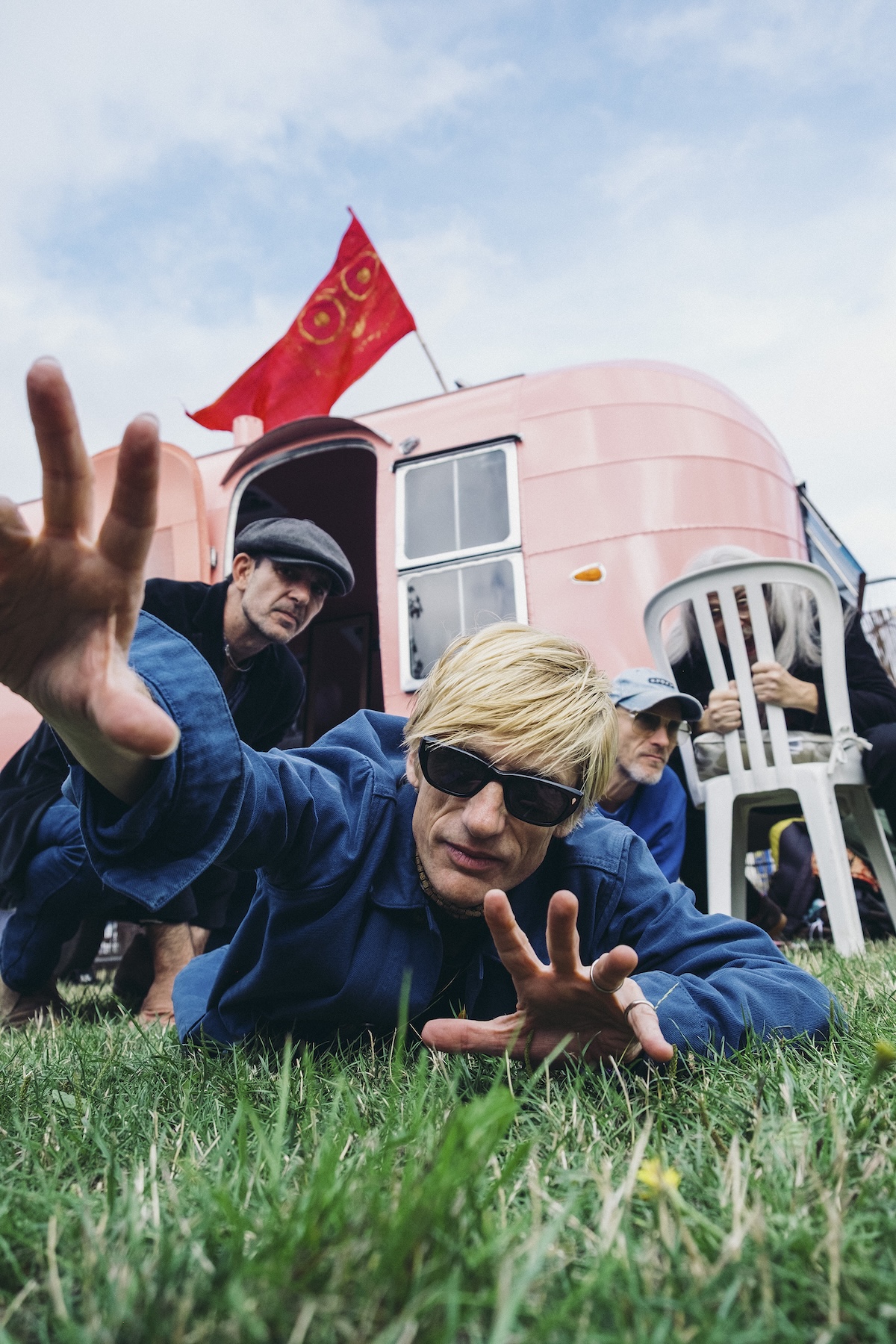
Is the spiritual Indian influence still as present for you as it’s been in the past?
CM: Oh, it’s in our DNA. The Indian influence was very audible because of sounds like the tabla, but it went deeper than that. It was a relationship with the music that it informed. Music is service. Rock ‘n roll comes from the church originally. Let’s not beat around the bush. It’s a spiritual thing. That’s why it has that ecstatic aspect to it. People lose themselves in music because it’s a spiritual connection. The Indian thing deepened that relationship with the music and took it to another level for us. People responded to it because it was very different to Britpop.
Was Wormslayer originally written as a film?
CM: Oh it’s quite a yarn. Basically, I wrote a film about 20 years ago which was based on a story my grandmother [Mary Hayley Bell] had written. My grandmother wrote plays, books, and films. She wrote some films for my mother too, when she was a young actress. I developed a film based on our family story about a little boy who grows wings. This script got stuck in development hell, in a Hollywood development dungeon. Years and years would pass, I still couldn’t get it free. These people wouldn’t let it go. They didn’t care that it was a family story. They just said, “We’re keeping it,” even though they hadn’t done anything with it. One of those typical stories. So I started writing it as a series of songs. I was going to do the whole album, but the band said, “Just do two or three songs and have that theme running through Wormslayer.” It’s nice when you have a musical side of your life. They don’t own that. This character can fly out of the dungeon because he can sing. He’s off. It’s really nice to have some of that story out there.
You’ve done a few films, haven’t you?
CM: A couple of films, and I’ve worked on lots of projects that have been in various stages of development. It’s amazing how long you can work in film and not actually get anything made. It’s a crazy world. I thought it was just me, then I found out George R. R. Martin had been involved in so many scripts and projects that never got made. It’s a strange business. In the last couple of years, all of that side of my life has gone into our videos and making sure that the band feels the character of the band and the songs are represented and that it’s fun to watch, fun to make, and supports the music. Nothing worse than a video that has nothing to do with the song at all.
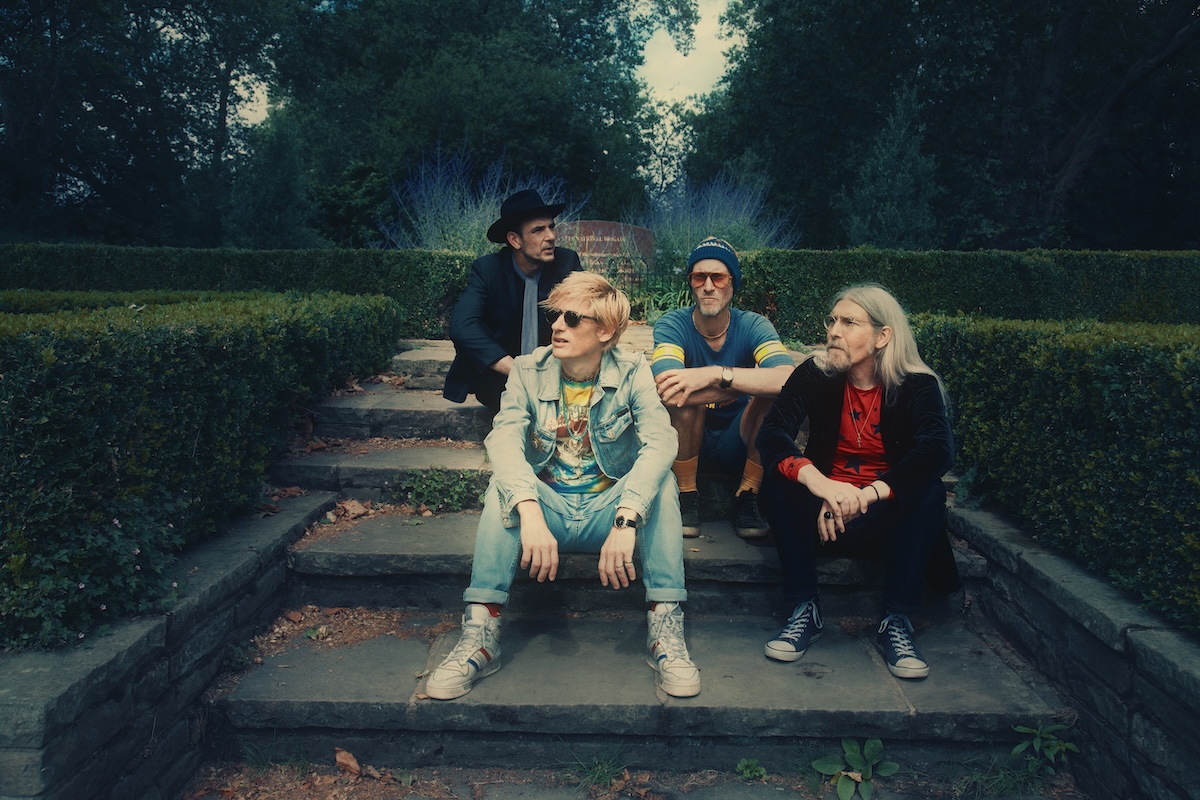
Why did you choose Middle Farm Studios to record Wormslayer?
CM: I live in Cornwall, at the Southwest point of England, and Alonza lives in the French speaking part of Belgium so the halfway point for us was just a little bit east of Plymouth in Devon, where the Mayflower sailed from. The great thing about the studio is it’s very isolated. In the summer, we would swim in the river in Dartmoor, keeps the drummer [Paul Winterhart] happy. If the drummer’s happy, then that’s half your problems fixed. Happy drummer, happy record.
Alonza Bevan: We’d heard about this studio for years through friends. We always loved tape, and it’s just a luxury, and it’s become such a hassle. You go to studios and ask if you can use the tape machine. “Oh we’ll have to demagnetize it. We’ll have to set it up and get some technician around.” It’s always a problem. But Peter Miles [owner/producer at Middle Farm], he’s a tape-ophile.
Did you work with him as a producer?
AB: He was engineering, and he had a production role in things as well. In terms of the workflow, he got us working and got us out of our precious little paradigm. It’s a rock ‘n roll band. You don’t overthink it. In the old days, you’d have a corporate studio. There’s a house engineer, and it was much more impersonal. But these days, just the way money works and budgets and the industry, is you’ve got a lot more of these home-run or producer-run studios. Middle Farm is one of these producer-run studios. It’s very homely. Everything’s got a personal touch. The gear is really nice. It’s like doing up a holiday rental as opposed to doing your own house.
What was the draw to recording Wormslayer on two-inch tape?
AB: It’s got a great sound. It sounds like records we know. The tape compression. You can’t work like you do in the digital sense: “Oh well, we’ll fix it in the mix,” or “We’ll sort that later.” You have to get it right. You can fix odd little bits, but it has to sound good, to be played down right. That was really refreshing. I’ve spent days cutting things into time and doing all that unnecessary editing. What modern productions have become, getting everything exact. When actually, what’s great about rock ‘n roll is the inexact bits, isn’t it? All the things the engineers were trying to get over back in the day: “Oh there’s a hiss on here,” or “We’re not getting an accurate reproduction, we got this distortion on the signal,” or “It’s compressing, losing six dB when it comes back off DAT, what can we do about that?” That’s what we love. That particular sound, for whatever reason, we associate it with rock ‘n roll. It just sounds tough, sounds great.
CM: I’ve noticed it with film as well. When you’re making a film, if there’s film in the camera, people focus and take the job much more seriously. It’s costing more money. If it’s not costing anything, if it doesn’t have to be developed, if it doesn’t have to be cut with a razor blade, it’s take after take after take. Apart from how it sounds and the magic of tape compression, it makes people focus and get better performances.
You mentioned earlier that you integrated what was happening live into this album?CM: The challenge for this band for 30 years has been capturing the live magic on record. We’ve had varying degrees of success, but a lot of the time it’s been strangely elusive. When we have, it’s been almost accidental. It’s absurd, but after 30 years, I think I might be getting the hang of this. Kula Shaker has always been a live band. That’s primarily what we were. Our big leaps forward always happened because somebody saw us live, or we managed to get a live performance on television. Even the session for KEXP sounded great, and I think that’s been very well received. We always wanted to be one of those bands that gave you an unpredictable, exciting concert. It wasn’t the same every night, and the band was always discovering new things. That’s been the goal and making a record that brings that into the equation has always been hard. I think we’re getting there now and finding a way for people to have that connection.

