

On a balmy autumn night in 2021 at Lincoln Center, Lido Pimienta made history as the first woman of color to compose for the New York City Ballet. The classical piece she created for the occasion, Lux Aeterna, scored a collaboration between the Colombian-Canadian singer and choreographer Andrea Miller called sky to hold. A year after releasing her celebrated third album Miss Colombia, Pimienta was in front of a decidedly uppity audience, a far cry from the people she makes music for, a crowd that, much like Pimienta herself, exists (and resists) at the margins of empire. It was in that hallowed hall and in this context that Pimienta let “Mango” ring out for the first time.
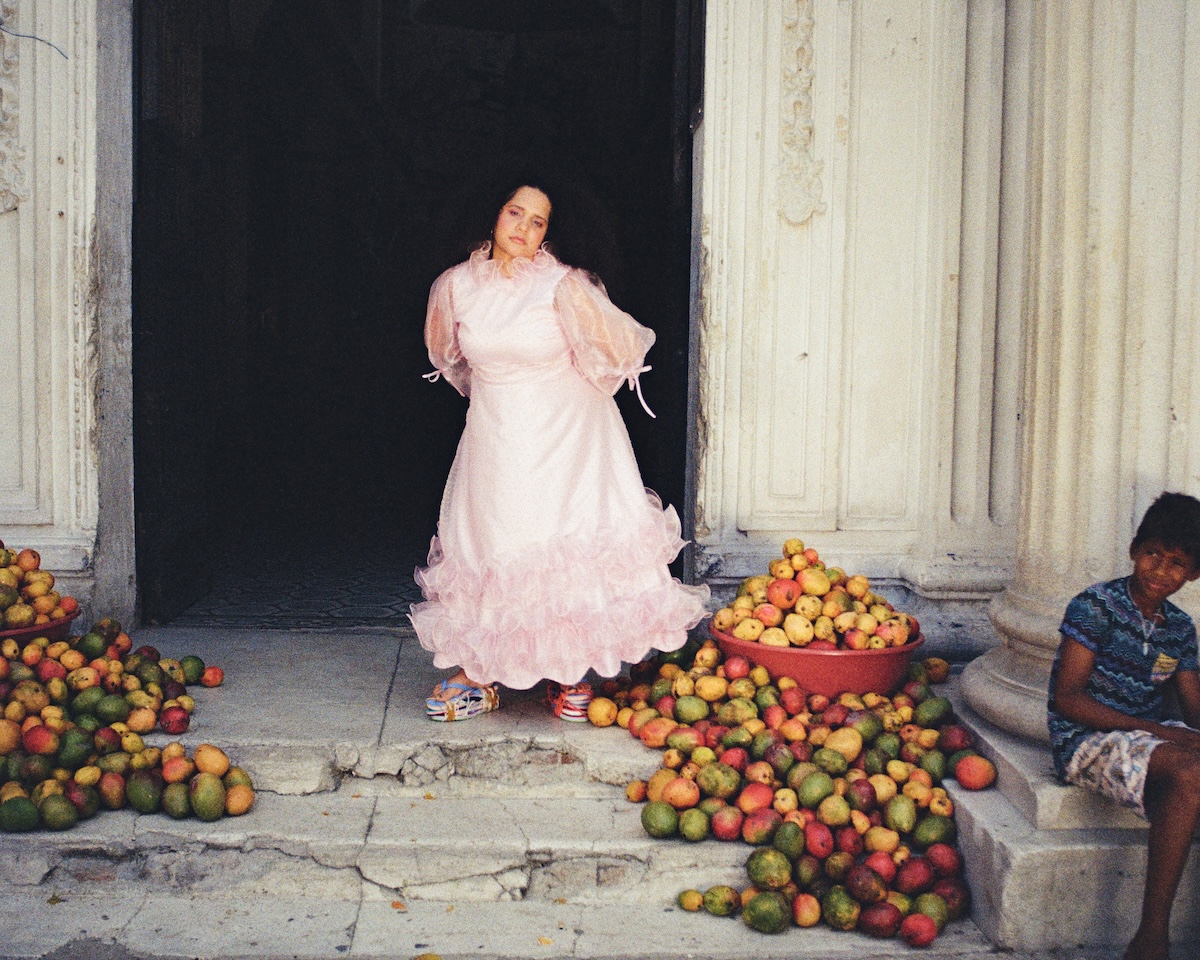
Have you ever really let yourself eat a mango? Let your nails dig into its flesh, its juice dripping down your chest, getting sticky? Pimienta sings directly to this carnal pleasure, one of the great joys of being raised Caribbean. That she does it to the tune of a classical harp, marimba, and string instruments that only propelled her voice further into operatic spaces where people like her are often excluded politicizes the whole affair—but she likes it that way.
“When I started writing this music, I knew I was going to sing ‘Mango’ with the best symphony orchestra in New York, so the music was very inspired by that fact; I knew all of these white millionaires wouldn’t understand anything that I had to say, so I gave myself the task of making music that reached my soul,” Pimienta reminisces of the historic moment. “I write the realities of my life, and ‘Mango’ was the first song I wrote conscious that it was going to be sung in front of that specific public. It was my first experience directing a symphony orchestra, and it required a lot of concentration. Not to mention the choreography of the ballet…it was a lot, but I felt great.”
This career milestone was followed by inspiration flowing out of the Polaris Prize winner like the juice from a ripe mango. It drove her deeper into classical music, a genre she continued to quietly study (specifically liturgical hymns like the original Lux Aeterna and 16th-century Castrati choirs) while working on other projects. In 2022, she launched “Lido TV,” a six-episode variety show which premiered at the Toronto International Film Festival and feels like an anti-colonial Peewee’s Playhouse. Pimienta was also the featured act at a Boiler Room session in Bogotá that included local talent like Venezuelan underground phenom Yajaira La Beyaca.
The culmination of this work happened this past spring with the release of La Belleza. Arriving four years after Pimienta’s Lux Aeterna filled the room at the New York City Ballet — and two seasons before Rosalía’s critically-lauded liturgical experiment Lux — Pimienta’s latest is built around orchestral and classical instrumentation. An album in nine movements, La Belleza is an exploration of light, of its eternity, of finding who took it, of searching for it in the dark. Pimienta worked with collaborator Owen Pallett as well as an orchestra in Medellín to create epic, moving arrangements.
There’s a beautiful contrast on this album between sounds and images. You’ll find cumbia beats interpreted by way of classical percussion (“Quiero Que Me Beses”) side-by-side with rattling dembow made with orchestral drums and introduced by an elegant oboe melody that has more in common with Swan Lake than with Daddy Yankee (“El Dembow Del Tiempo”). It’s an album that interrupts spaces where Latinxs (much less those with Black roots) don’t usually find themselves reflected, an Uno-reverse of European classical music that elevates the movement of the hips to reggaeton and the quotidian eroticism of eating a mango to the level of Don Giovanni or The Magic Flute.
“The studio orchestra I used [in Medellín] really understood the songs; every Colombian person, no matter their politics, understands my colombianidad and that my work has everything to do with what I want to say as a Caribbean woman, someone who is largely considered to not have a voice,” she says. “Colombia is a musical mecca, but I keep bringing something different from the mainstream, where there are other Colombians, who represent a very small portion of what would be “diversity” in the country, and aren’t really investigating anything—maybe how to do good marketing, which is what you do if you want to make money. I don’t want to do that. I want to make music for the canon.”
In a statement, Pimienta describes La Belleza as “a gorgeous album inspired in the beauty of being Indigenous and Black, about the joy of sticking my teeth into a ripe mango, about love unrequited, about ceremony and ancestry, about life and death, about transition of soul and letting go of all that makes us feel a stone has replaced our heart.” The artistic world Lido Pimienta has created since the start of her career is embroiled deeply in her ancestry both in practice and praxis.
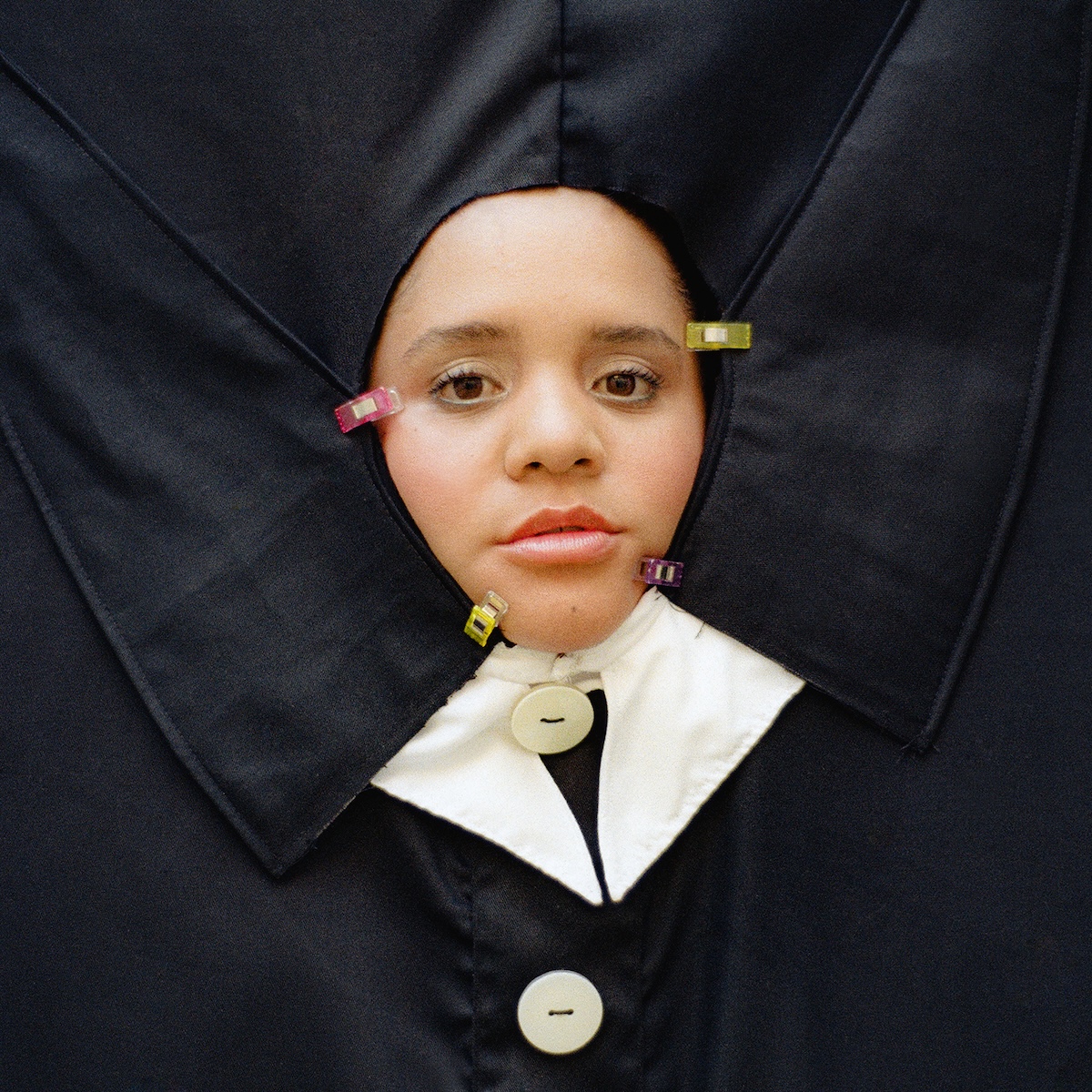
Pimienta traces her roots to La Guajira, an area to the north of Colombia on the Caribbean coast near the border with Venezuela. The aesthetic behind La Belleza’s art direction nods to St. José Gregorio Hernández, the Venezuelan medic who was canonized this year and is also revered in Colombia. The iconic saint of the northern Caribbean diaspora is often depicted in a suit, which Pimienta embodies in the photos. La Belleza breaks beyond the borders of land, class, race, spirituality, and even sexuality. Pimienta herself is queer, and makes it a point to sing focusing not on gender, but desire.

“[‘Mango’] was transcendental in that it wasn’t a woman singing to a man or vice versa; it’s a song without a binary, where the only action that exists is a human in their pleasure,” Pimienta tells SPIN. “On “Busca La Luz”, I get to the conclusion that there’s nothing left but to hold out for hope, because those same patriarchal transphobic multi-million dollar forces depend on me, the colonized subject, being depressed. [“El Dembow Del Tiempo”] has a sound with a base in opera, because the voice is working in an operatic mode with a percussive base made with classical instrumentation, but the beat is pure dembow, and the instrumentation is largely percussion, drums. There are sounds that you can’t just emulate with classical European instrumentation. I studied art history and curatorial practice, and having that context helps me locate and document my own work, and that was the experiment I did with La Belleza. You can be in the orchestra pit with a master who guides you, analyzes the music, sees the human capacity to sustain a note on an instrument with no AI or electronic production help. There’s no room for interpretation—it’s just what it is, and that is so beautiful.”
Miss Colombia’s experiments in electronica and cumbia stand against the dive into classical music and Venusian aims of La Belleza. Thinking about the impact Lux has had on the conversation, and looking at the similarities between both of these records. It’s worth thinking through who gets what glory and who has the label machine chugging for them. Still, La Belleza was well-received when it came out, and is arguably Pimienta at her most refined and bold yet.
This past September, accompanied by a marimba, clarinet, oboe, violin, bassoon, and percussion that included a hand drum, Pimienta brought a selection from La Belleza and Miss Colombia to NPR’s Tiny Desk. The last song, “Eso Que Tu Haces,” whose video was shot in the first free African enclave in Colombia, was dedicated to all people being oppressed in any way, and came with a gesture of hope from Pimienta, who shortly after sang while holding a keffiyeh: “The people that are messing up the world are the minority, not us.” Her efforts to uplift oppressed peoples from Palestine to Palenque are central to her artistry, and are in many ways what makes it beautiful—though for her, belleza is something so much more simple than a world dominated by peace or a free Caribbean (though this is what she strives toward).
“For me, beauty is laying in a chinchorro (hammock) looking up at a mango tree and eating one right there; that’s what beauty is to me,” she admits with a gentle voice. “When I think about beauty, I’m always wondering “now what?”, which is a question I ask myself [in “El Dembow Del Tiempo”]. Beauty is resistance in poetic form; it’s me taking the liberty to say ‘okay, classical music is difficult to make? Well, I’m here, and I’m going to make it.”
This interview was conducted in Spanish, with quotes translated and edited for clarity.

