

In February 2014, I tuned in to the BRIT Awards to watch my newly minted friends Rudimental’s performance. I didn’t expect to get knocked out by Ella Eyre, the featured vocalist on their chart-topping, BRIT-winning single “Waiting All Night.” In a painted-on catsuit, with enviable tresses, and a commanding presence, she owned that stage. Like tens of thousands of people who watched the awards show, I hit “follow” on Ella’s socials and have been watching her with a keen eye ever since.
She was 19 years old at the time and seemingly permanently on the road. Besides releasing her own songs—a few of which entered the Top 20 in her native U.K.—and an entire album, Feline in 2015, she featured on many artists’ music: Bastille, Naughty Boy, Tinie Tempah, and DJ Fresh with whom she had the Top 5 single, “Gravity.”“ Says DJ Fresh, “Everyone knew Ella was something special. She sounded like an old record, but while unapologetically British she also has her Jamaican roots. We got on straight away and she’s one of my favorite artists to work with.”
“I love Ella,” Rudimental’s sometime-central figure Amir Amor says. This sentiment is shared by not just me, but by the many hundreds of thousands of fans who jump on anything she’s done. It took 10 years, but Ella is back with a new album, everything, in time. A far cry from the pop/dance/drum and bass-oriented songs that put her on the map as a teenager, everything in time is the kind of record she was trying to make when she was first signed at 16.
A swimmer on scholarship to a fancy boarding school, Ella thought musical theater was her calling before she recognized she wanted to sing her own songs. She earned a place in the performing and creative arts BRIT School (alma mater of Adele and Amy Winehouse, among others) and was signed to a record deal in short order.
She fell into the pit so many young artists do of having the industry override her artistry. It didn’t help that the recognition she received was for styles that weren’t in line with the music she wanted to release as a solo artist. Still, Feline, with its endless list of behind-the-scenes bodies, was released. “I love Feline because it’s got songs on it that I wrote that have a special place in my heart,” says Ella. “But they didn’t end up being how they were supposed to be. That is what everything, in time is supposed to be. It’s like tipping my hat to Feline and saying, ‘We did it.’”
The soulful and soul-baring everything, in time is based in live instrumentation and is wholly Ella’s vision, sound, and words. “I wanted to work with people I could feel vulnerable in a room with, not just some random person I’ve speed dated in a studio. I wanted it to be real connections,” says Ella, who namechecks Aston Rudi and Adam Argyle as two of her key collaborators on the album, which will put her on the global music radar.
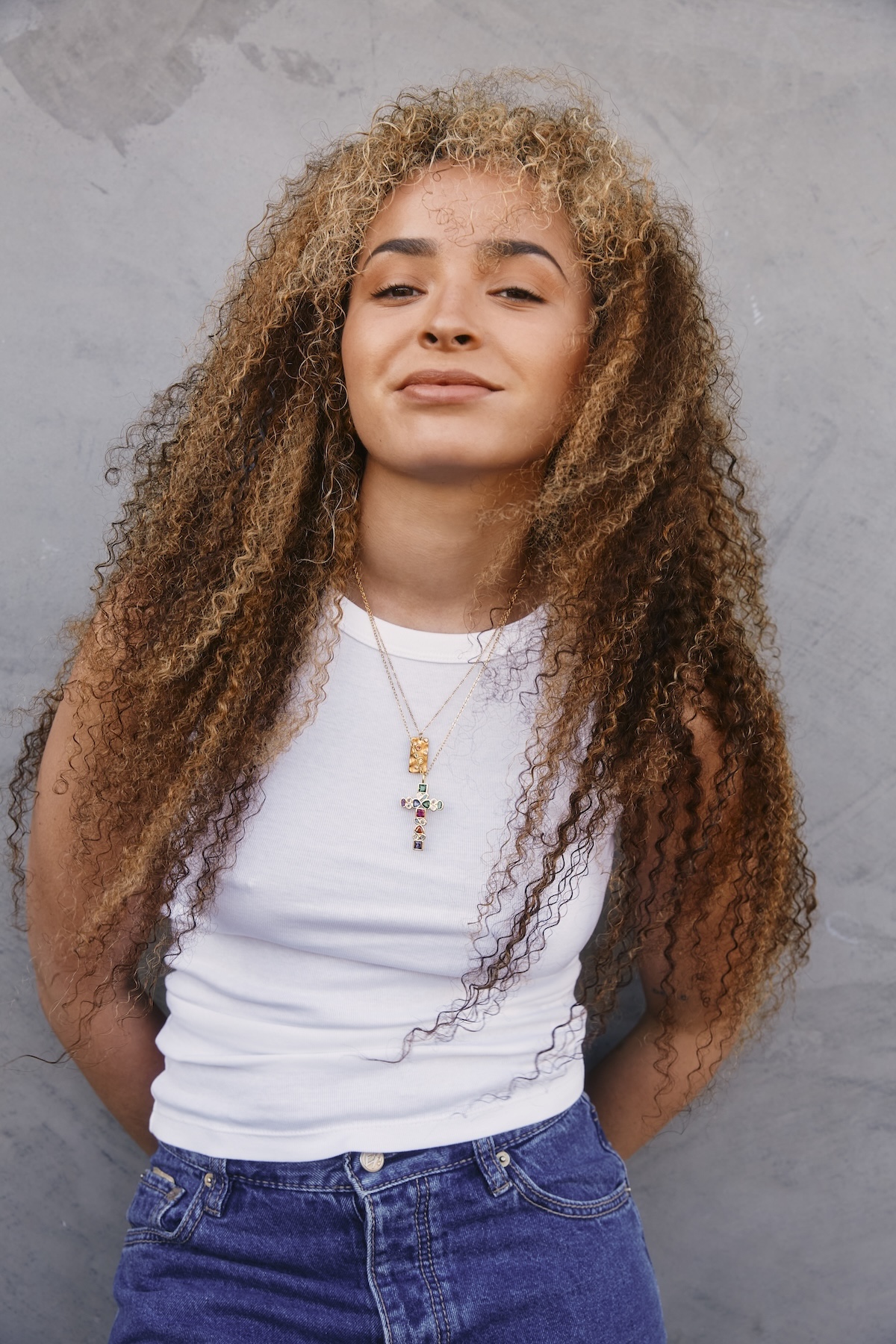
Ella was always supposed to be an international superstar—at least that’s what I always thought—but when we speak after years of admiration from afar, she pushes back strongly against this goal. In preparation for our interview, I didn’t just read and watch and listen to all things Ella, I also tried to get my already-big hair as huge as possible in tribute to her famous locks. She recognizes what I did immediately and says next time she’ll come correct. In a beanie with her corkscrew curls peeking out, she looks 100% to me, a burnt orange hoodie with gold chains spilling out of the collar completing the look. More importantly, she is articulate and realized. It took a long time and many hurdles before she reached this place, which she acknowledges is not just the title of the album, everything, in time, but also the concept.
Why are you not an international superstar?
It’s a big old question, isn’t it? There are a lot of contributing factors to people’s successes. I’ve had a lot of challenges in music. Maybe one of the reasons is I started so young, at an age where I hadn’t fully developed who I was as a person, as an artist. I look back at when I first started, and given what I know now, and the length that I’ve been able to survive in the music industry and the experiences I’ve had, I realize how little I knew what I was getting myself into. If I was geared with the information and the experience I have now, it would have been a much different road. When I was young, I wanted to be successful. I wanted to grow as an artist. But I hadn’t really figured out what that was going to look like yet. At the moment, particularly with this album, it’s my opportunity to do that, to be exactly who I want to be, and make the kind of music I think I should be making, and to stand on my own two feet with that. At 16, when you’re being told, “These songs aren’t working,” or “You can’t really write songs, we’re going to have to A&R the project,” that can have a lot of impact on your self-esteem, your ability, and your belief in yourself. I had to work back up from that place, and really focus on what I wanted to be as an artist.
What were some of the events that made things go sideways for you professionally?
There was so much expectation and hype around my name before I even released my first album. That was not stuff I had come up with. I was going along for the ride because I was so excited to be received well, and for people to be enjoying my voice and to be loving my live performances. But none of that was refined and finessed yet in a way that was consistent. It was very hard to have consistency when I got put on a record that went to number one and I won a BRIT Award, and my first album hadn’t even been finished yet. I went into the BRIT Awards with about 8,000 Twitter followers, and then I came out with about 80,000 and my life changed overnight. Suddenly, 80,000 people knew who I was, and that was only growing. My reputation was growing, but my album wasn’t yet fully formed. I had my first single, which I loved, and my label at the time were like, “We can’t release this yet because we don’t know what the single after this is yet.” That was one of our biggest mistakes. We didn’t utilize that exposure at the very beginning, and then everything was delayed from there on.
I’ve always missed the boat with any of my releases and any of my opportunities to stand out and take control. Being a young person and being ordered around by a lot of middle-class men in the U.K.—and I didn’t have a single woman around me either—definitely, in hindsight, a lot of things could have been done differently to preserve my artistry and my youth to help me grow and to work that out.
There were no women around you professionally?
One of my biggest frustrations was not realizing that I didn’t have a single female member on my team for the first eight years. This isn’t shade on my managers, because one of them is still my manager to this day. It was more that you’re doing photo shoots in a room full of men. I’m quite a confident person, and since I don’t really give a fuck, I’m there to do my job. But when you’re choosing the photos, even if there’s an angle that I don’t like, there’s no one there to be like, “Ella, by the way, lift your head up,” or “Make sure you’re doing this,” or “Come have a look, see if you’re liking this.” There’s some things men can’t understand in that regard. As soon as I got my female manager, she changed the landscape of support for me. That was also when I first got a therapist, because she recognized that my dad had died and I wasn’t doing anything about that. There was an emotional element missing that I needed entering an industry that expects you to bear your soul and profit from it but provides no support around that. Even if there was an assistant on the team that was a female, they might have been able to say, “Hey, by the way, I think we should think about this.” But there was no one to do that and I was too young to realize it.
Like I said, I have no complaints about my managers, but I was so unaware that the female touch was missing. Particularly because there are females that listen to my music, I need a more diverse representation in the people that support me and are helping me grow. You can’t always get it right, and I’m not saying a full female team or female/male team is the problem. But for me, especially because I’m mixed race, it’s really important to have diversity on the team in all regards, whether that be gender or race. I also think it is so important to have people from different walks of life, opinions, and eyes across what I’m doing.
For young artists these days, there is so much more help out there, and so many more resources to utilize and people to ask. It’s really important for artists, new and old, to surround yourself with people that you trust, people that can have your best interests at heart, and people that can really tell you how it is—without making you feel like a failure.
How have you benefitted from adverse experiences?
Right now, I feel like the best version of myself. I turned 30 last year. I was so excited to turn 30 because I felt more myself than ever. I felt more in control than ever. I was inspired and motivated to make the decision to make my album and put it out as an independent artist. I don’t really care about being international or being chart topping. Obviously, that would be nice, and it would pay my bills, and there’ll be a lot less stress. But I feel so creatively fulfilled with the music I’m making and the stories I’m telling. I have absolute faith that at some point that will catch people up. I look at my favorite artists like Little Simz, she’s been an independent artist from the very beginning. A lot of other artists have been true to themselves from the very beginning. If you don’t deter from that, eventually people are going to get it. For me, I never found my sound and my lane and my thing, because I was jumping on this dance record, that dance record, this pop song, that pop song. It was hard for people to know where to look and what they’re looking at me for. And I think it was really important for me to find that before I did anything else.
What helped you find out who you were as a person and as an artist?
Despite the fact that I’m not this international superstar that some people might think I should be, I’ve been able to survive an industry that is not for the fainthearted. After 10 years, I’m still here. I’m still able to do interviews with people that are interested in what I’m doing. What helped me find it was having to take a massive step back from everything I knew and having to unlearn a lot of my people-pleasing behaviors and a lot of my wanting to get validation from other people. I recognize that in myself in so many other ways, not just music. I needed to find happiness within myself and a confidence within myself that wasn’t performative, that wasn’t media trained, that wasn’t this big, spunky, confident Aries person. I needed to strip it all back and focus musically and lyrically on what was important to me, and trust the process. Being an independent artist is not easy at all. My budgets are not what they used to be. They’re not unlimited. I’ve really enjoyed having to club together and work and be challenged at making this project come to life. People around me that are involved are here because they want to be, not because they’re on a salary to do so, not because they’re trying to get kudos for their next big job. People around me are very much committed. That feels like a very different shift to what I was in before.
You’ve been doing these wonderful acoustic gigs which are a big change from your arena-filling bombastic performances. What has that been like for you?
I’ve realized recently that when I do acoustic shows, the response is just on a different level. Because you’re intimate, front facing an audience, you’re able to chat, you’re able to show your personality in a different way that all the big bells and whistles and production can’t do. At the same time, one thing I have learned about myself in this period of trying to get this album together and releasing it, is that I really do have to make decisions with a bigger picture, particularly after having vocal surgery. Part of the reason why I had to have that was because I did 300 gigs in one year at the beginning of my career and didn’t have the vocal support to do that effectively without causing serious damage.
Was the vocal surgery terrifying for you?
It was a whirlwind for so many reasons. COVID was happening at the time, so mentally there were so many challenges going alongside it. But weirdly, COVID was the perfect time for it, because it was when everyone else was locked indoors and not able to tour and not able to do much, so I didn’t miss out too much. Mentally, it was very challenging. It was a very intense surgery, very invasive, so speaking was completely off the cards for a month. I wasn’t allowed to cry, I wasn’t allowed to laugh. When you’re going through that kind of turmoil and that trauma, that fear of not being able to express yourself naturally just adds to that whole experience. Even after the first month, my speech therapist was like, “We’re just going to see where you’re at. I want you to say, ‘Hey, how are you?’ Don’t panic too much if nothing comes out.” I didn’t think for a second that nothing was going to come out. So, when I said, “Hey, how are you?” and nothing came out, it was earth shattering. It was so scary to think that I’d been silent for a month, and it felt like nothing had changed.
After that point, I was doing exercises for a minute every hour for a week, then it was two minutes every hour for a week, three minutes every hour for a week. It was very incremental to recover. It was very long and drawn out and very difficult for so long. To get to the end of that six months was really magical. I’m really grateful for the team that I had that got me through that.
How did things change for you after the post-surgery period?
It put a lot of things in perspective. That was the reason I decided to scrap the album I was making with my previous label and just go at it alone. I thought, if I’m ever going to be on stage again, if I’m ever going to be sharing my voice for people, I’ll be fucking damned if I’m releasing this music that I’m making to please my label so that they’ll keep funding the project. I would much rather be making a project that I believe in and getting a label to sign that project finished as it is, as opposed to trying to convince people that I know what I’m doing. It’s not been without its challenges, but it has been so rewarding to find a label—and it wasn’t just one in the end that was interested—and then to be able to be on this journey to finish it, and for it to turn out the way it has. For about two years, the album was called Exactly As I Am—trying to find self-acceptance and really getting into who I am. But by the time the album was finished, “everything, in time” was the last song I wrote and decided to put on the album. Sonically, musically, but also lyrically, it made the most sense because it’s taken 10 years to get to this point. I had to have vocal surgery. I’ve had to learn more patience than I’ve ever, ever, ever known. The beautiful thing about understanding that you can’t control everything, that everything is going to happen in its own time, and that you can’t control that, and finding peace in the process, and being able to be in control of your emotions for the most part is a really big lesson that I took away from making this record. It just feels special. It feels like I’ve done something for myself.
And the fan base you started cultivating a decade ago has stayed with you and remains interested in what you’re doing.
I’m so grateful that people still care and are interested. I’m so determined to prove that the hype and the expectation that was put on me at 16 was right, just at the wrong time. The album was originally 20 songs. I wanted it to be a big, long album, because it has been so long, but I had to make cuts based on things not sitting right with everything else. I wanted the body of work to feel like a really considered piece. I feel very proud of it. I tell stories that feel very personal and vulnerable to me, but in ways that I think people can relate.

