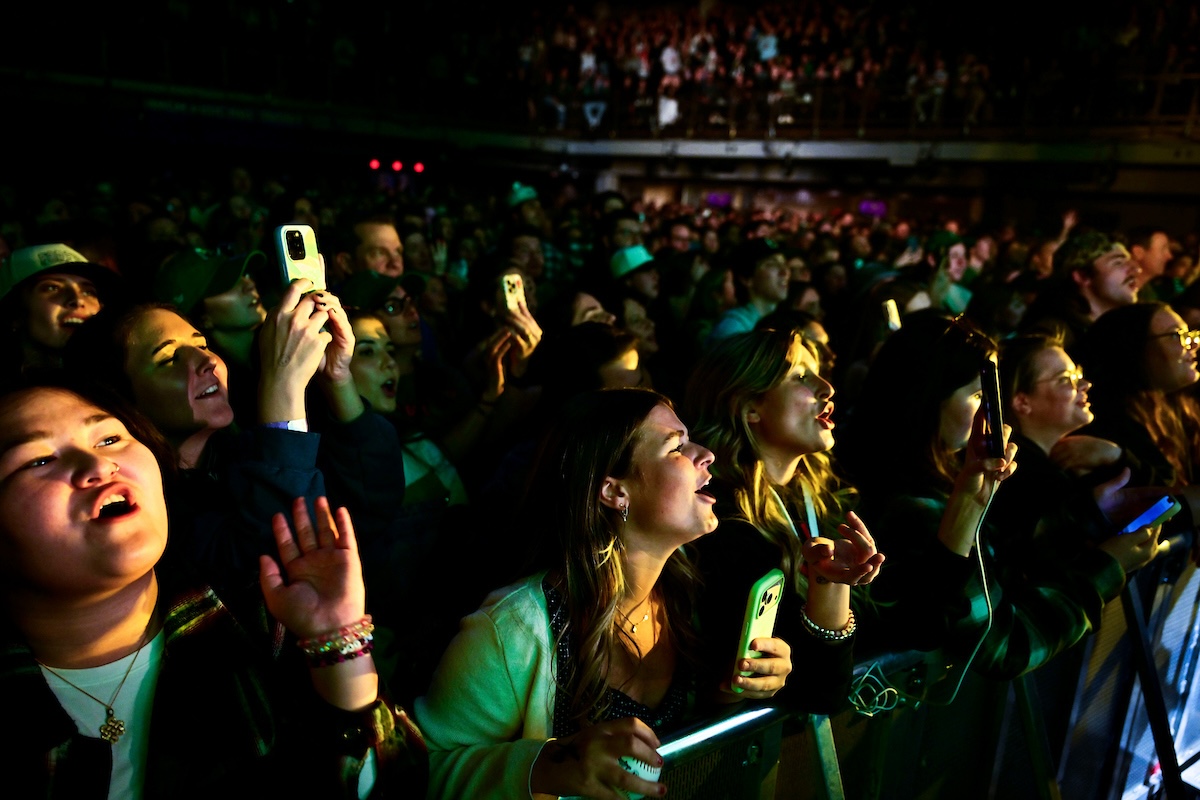

“You guys are so happy right now, I feel bad for what’s about to happen,” Noah Kahan jokes from the center of Boston’s MGM Music Hall at Fenway’s stage. It’s a running joke for the musician, but although he plays music that makes people want to cry, his New England-inspired poetry is more powerful than its ability to embrace little light. As he says, with a smirk directed toward his own family sitting in the audience, the songs he’s about to play might “make you have a tough conversation with your dad.”
Kahan has summoned the 5,000 people in attendance to “raise a lot of fucking money” for the singer’s Busyhead Project. Named after Noah Kahan’s 2019 debut album and aimed at providing resources and information needed to end the stigma around mental health, the New England native was inspired to start the initiative in 2023 after a lifelong struggle with his own mental health. He has since then raised $4 million, and this benefit show in Boston has added another $1.5 million, along with an official city of Boston proclamation that November 20 is now known as “The Busyhead Project Day.”
Like a lot of Kahan’s fans, I’m no stranger to mental health struggles. I come from a long line of anxious humans and between small avalanches of panic attacks through my 20s, and the taught pull of genetically inherited agoraphobia through my 30s, I married and had two children. My oldest daughter is now 10 and on the precipice of all of the big things—teenagedom, hormones, heartbreak, and the unavoidable disorienting spin of anxiety.
As Kahan sings about medication, pills, and anger, she stands beside me in the crowd, shifting this way and that, trying to catch a glimpse of him beyond the grownups screaming his lyrics. This is only her second concert, and I think back to my first show at 10. My uncle was the manager of the wild Bad Brains, and I watched them from the back of the small NYC venue with my dad and very pregnant mom. It was memorable, for sure, maybe a little frightening, but I know that this experience, and Noah’s music in general, will create important memories for my daughter. As a mother, listening to Kahan’s honesty about depression and anxiety with her feels like the parenting help that I need most right now.
Our approach to mental health has no doubt changed over the years. Social media is bursting with reels and memes about the Boomer generation’s inability, or refusal, to work on themselves. Researchers are finding that Gen Z, while more transparent about mental health, are facing new challenges due to social media and the pressures it brings for portraying perfection and happiness. Noah’s music has arrived at just the right time. Not just for me as a mother, but for the younger generations (or “digital natives” as some call them).
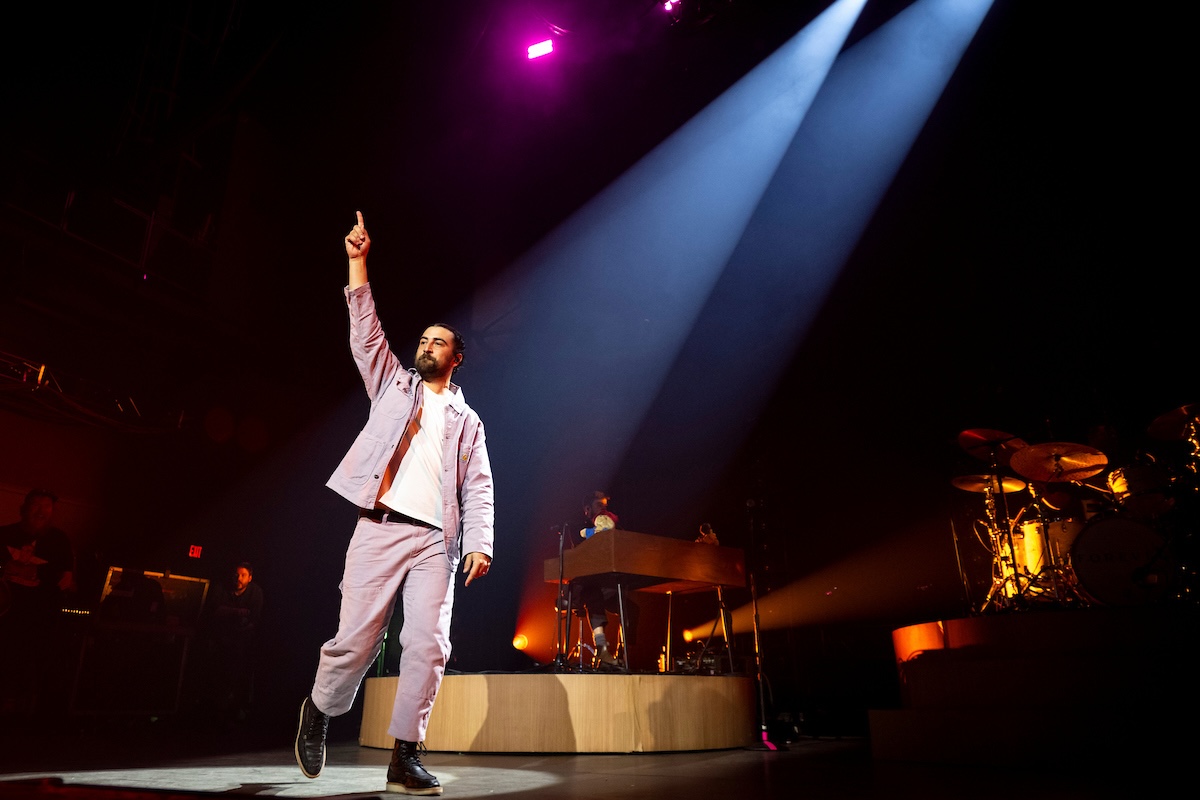
Some might ask why I’m so eager to share music that focuses on someone’s lowest points with my daughter. Why not simply bounce around the living room to the AI-designed songs of KPop Demon Hunters? I’ve debated plenty of times with my husband about my love of sad music—why it’s the best kind of music and always at the top of my playlists. Because it’s real, and that’s what makes it powerful and beautiful. Kahan’s lyrics skim away the fluff, leaving the most meaningful and vulnerable—”And I divvied up my anger into 30 separate parts / keep the bad shit in my liver and the rest around my heart.” His honesty sets him free and in turn, helps to pave an easier path for the generations behind him. Before giving over to the lights and sounds of his new song “Deny, Deny, Deny,” Kahan stands before us and admits more to the crowd about his time recording the new album The Great Divide (due to release around the end of this year or early 2026). “I’ve been through a lot, and making this album was pretty hard, but,” he adds, proving my point about the beauty of hard shit, “I’ve never been more proud of the music that’s going to be out for you guys.”
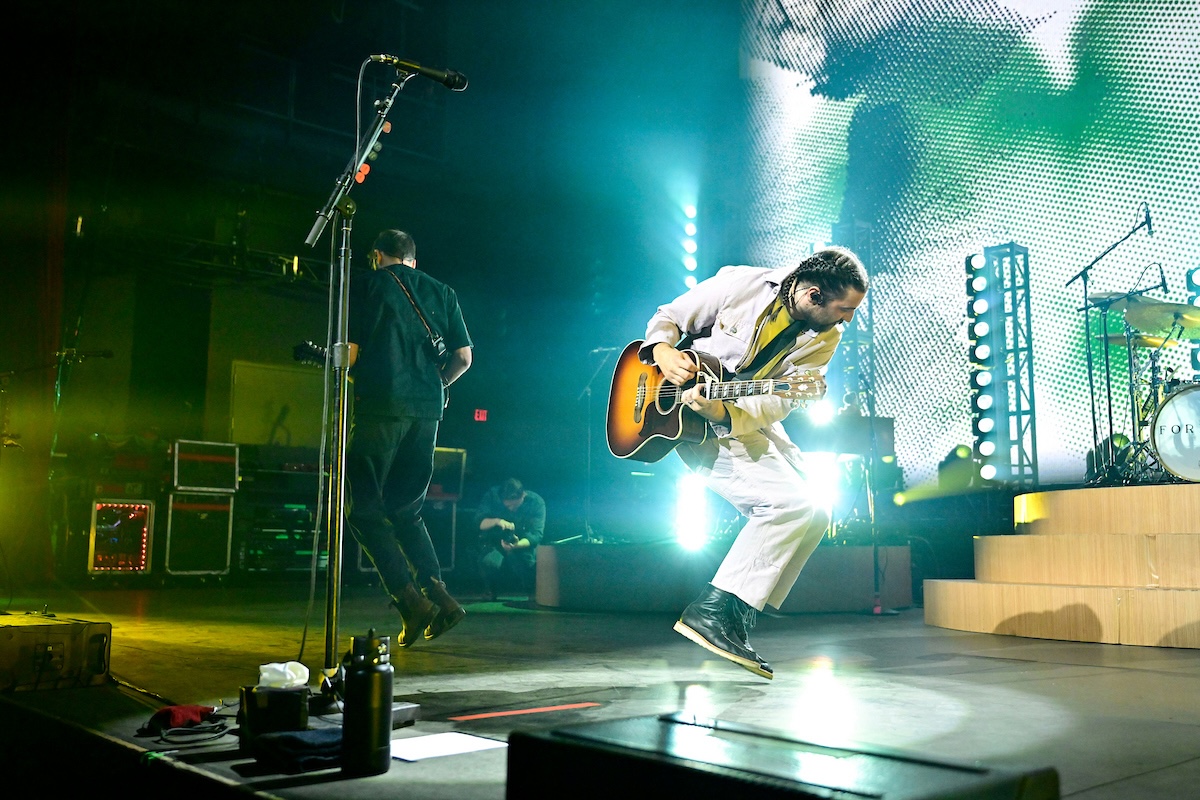
As I stand with my daughter in the middle of MGM Music Hall and watch her absorbing the energy of not only Kahan, but the thousands of people around her who are cheering for Kahan’s efforts in mental healthcare, I’m grateful. His outspokenness and work with The Busyhead Project, and his ability to give my daughter and me a beautiful way to bond and talk about mental health, is something that I hope can continue for years to come. His music, lyrics, words of support spoken into the microphone—it’s important for his generation, my generation, and the generation of kids we’re raising. By singing about it, by making something terrible into something beautiful, I can only hope that my daughter and her younger sister can learn from artists like Kahan. I don’t want them to find resilience in his music—in fact, I kind of hate that word—but rather learn to accept their own heads and hearts, to use each unbearable worry or moment of sadness to uncover and be outspoken about their own truths.
“You guys are really making a difference and it means so much to me—it’s going to mean so much to people who need these resources,” Kahan tells the crowd about the money raised for Busyhead Project. And then, before things can get too serious, reminding us there’s always room for humor, he adds, “Alright, we’re going to play a song about wishing the worst for people.”